The Architectural Archive
A timeline of Blackheath
From Roman roadways to royal parades — the eras, events and buildings that shaped the village.
Blackheath is one of London's oldest recorded open spaces, and its architecture mirrors eight centuries of English ambition, rebellion and refinement. Trace the milestones below to see how marshland became a village, and a village became a sought-after address.
c. 43 AD
Watling Street across the heath
The Roman road linking London (Londinium) to the Channel ports crossed the high ground that would become Blackheath. Traces of this ancient route shaped later footpaths and parish boundaries.
1086
Recorded in the Domesday Book
The surrounding manors of Greenwich and Lewisham are recorded in the Domesday survey. The open heath — 'Blec Hede' — served as common grazing land for the manor of Greenwich.
1381
The Peasants' Revolt gathers
Wat Tyler rallied rebels on Blackheath before marching on London. The heath's long history as a site of popular assembly — and dissent — begins here.
1497
The Cornish Rebellion defeated
An army of Cornish rebels camped on Blackheath and was routed by Henry VII's forces at the Battle of Deptford Bridge. The heath's role as a mustering ground continued through the medieval period.
1600s
A fashionable retreat from London
Blackheath began to attract wealthy Londoners escaping the plague and the city. Grand houses and hunting lodges appeared on the edge of the common, beginning the area's reputation as a desirable address.
c. 1700
The Cator family acquire the estate
John Cator began assembling the land that would become the Cator Estate, commissioning elegant Georgian villas and terraces set around landscaped grounds — the foundation of Blackheath's distinctive residential character.
c. 1790
The Paragon is built
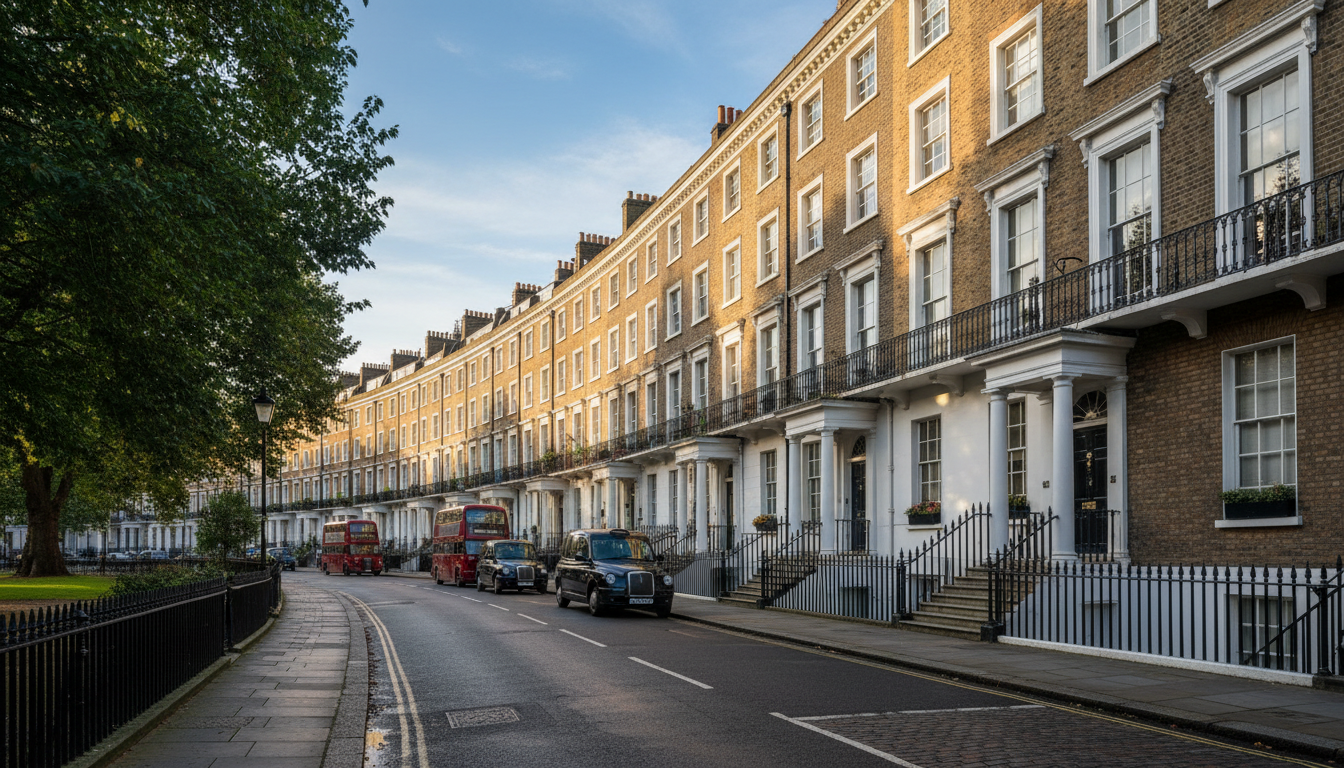
Architect Michael Searles completed the crescent of fourteen houses known as The Paragon — one of Blackheath's finest Georgian set-pieces, designed as a single sweeping elevation facing the heath.
1820s
Royal Parade and Tranquil Vale take shape
As Blackheath's appeal grew, commercial parades and terraces were laid out along the village streets, establishing the shopping rows and promenades that still define Blackheath village today.
1836
The railway arrives
The London & Greenwich Railway opened, one of the earliest passenger railways in the world. Blackheath station followed in 1849, making the village easily commutable from central London.
1857
All Saints Church begun
G.E. Street, a leading architect of the Gothic Revival, designed All Saints Church. Construction continued until 1864, bringing a bold statement of Victorian ecclesiastical architecture to the heath.
1896
Blackheath Halls open
Blackheath Concert Halls — now Blackheath Halls — opened as a venue for concerts and public events, becoming a cornerstone of the village's cultural life and one of the oldest purpose-built concert halls in south London.
1900s
Edwardian expansion
The turn of the century brought further terraces, schools and civic buildings, many in the Arts and Crafts and Neo-Georgian styles that soften the transition between grand Victorian villas and later 20th-century housing.
1940s
Wartime damage and rebuilding
Blackheath suffered bombing during the Blitz. Post-war rebuilding saw lost terraces reinstated and new housing erected, while the Cator Estate was recognised as a conservation area worthy of preservation.
1970s
Conservation area designation
The Blackheath and Cator Estate Conservation Area was formally designated, protecting the Georgian and Victorian streetscapes and ensuring the heath's distinctive architecture is preserved for future generations.